If you’ve found a 1941 D penny in your change, an old jar, or a family collection, you’re probably wondering:
What is a 1941 D penny worth today?
The good news: many 1941-D wheat pennies are worth more than face value, especially in high grades or with errors. The bad news: most are very common, so they aren’t rare treasures—but they’re still fun and collectible.
This guide is written for a U.S. audience and optimized around the keyword “1941 d penny value” to help you get clear, accurate answers that can perform well in Google Search and Discover.
Quick Answer: Average 1941 D Penny Value
Here are typical retail price ranges (approximate) for a normal 1941-D Lincoln wheat penny with no major errors:
- Heavily worn (Good–Fine): $0.05 – $0.15
- Lightly circulated (Very Fine – XF): $0.15 – $0.50
- Uncirculated (MS60–MS63 Brown/Red-Brown): $1 – $5
- Choice Uncirculated (MS64–MS65 Red): $8 – $30+
- Top-grade certified (MS66–MS67 Red): $75 – several hundred dollars
Values can change with the coin market, so always check a recent price guide or auction results if you think your coin is high grade.
Understanding the 1941 D Penny
To understand 1941 d penny value, it helps to know a bit about the coin:
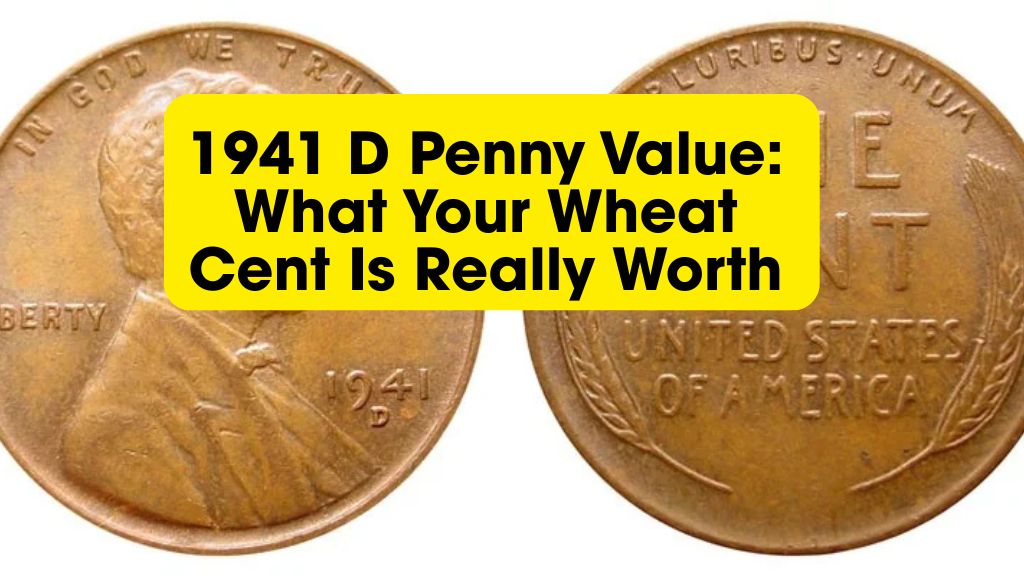
- Design: Lincoln Wheat Cent (wheat ears on the reverse)
- Mint: “D” mintmark stands for Denver
- Composition: 95% copper, 5% tin and zinc
- Weight: 3.11 grams
- Mintage: About 128 million coins
Because so many were made, the 1941-D wheat penny is not rare in circulated condition. The real value is in condition and color, and in errors or varieties.
Step 1: Find the Mintmark and Date
Look at the front (obverse) of the coin:
- The date “1941” is on the right side, under Lincoln’s bust.
- Just below the date, you should see a small “D” – that’s the Denver mintmark.
If there is:
- No letter: it’s a Philadelphia penny (1941, not 1941-D)
- An “S”: it’s a San Francisco issue (1941-S)
This article is focused on 1941-D pennies only, because mintmarks can change the value.
Step 2: Grading – Condition Is Everything
The biggest factor in 1941 D penny value is grade, or how much wear the coin shows.
Circulated 1941-D Pennies
Most 1941-D pennies you find in:
- Pocket change
- Old coin jars
- Bulk wheat cent bags
…will be circulated. Common signs:
- Flat details on Lincoln’s cheek and jaw
- Worn wheat stalks on the reverse
- Dark brown color and small contact marks
Values for circulated examples typically range from 5 to 50 cents, depending on how worn they are.
Uncirculated (Mint State) 1941-D Pennies
An uncirculated penny has no wear from circulation. It may still have small marks from the minting process, but:
- Lincoln’s hair, cheek, and coat details are sharp
- Wheat lines on the reverse are well-defined
- There is original “mint luster” that shines when tilted
Uncirculated 1941-D pennies can be worth $1 to $30+, and the very best certified red examples in grades like MS66 or MS67 can sell for $100–$500+ at auction.
Step 3: Color – Brown, Red-Brown, or Red
Collectors pay more for redder copper pennies, especially from the wheat cent era.
Professional grading services (PCGS, NGC, etc.) describe color as:
- BN (Brown) – dark, chocolate color
- RB (Red-Brown) – mix of brown and reddish copper
- RD (Red) – bright original copper color, little or no toning
For the same grade, a 1941-D penny that is full Red (RD) can be worth several times more than a Brown (BN) example.
1941 D Penny Value Chart (Approximate)
These are ballpark retail ranges for a normal 1941-D wheat cent with no major error, as of recent market trends:
- Good (G-4): $0.05 – $0.10
- Very Fine (VF-20): $0.15 – $0.30
- Extremely Fine (XF-40): $0.25 – $0.50
- About Uncirculated (AU-50): $0.50 – $1.50
- MS60–MS63 BN/RB: $1 – $5
- MS64 RD: $8 – $15
- MS65 RD: $15 – $30+
- MS66 RD and higher (certified): $75 – several hundred dollars, depending on eye appeal and population
These numbers are estimates, not guarantees. Prices vary by dealer, region, metal prices, and collector demand.
1941 D Penny Errors and Varieties
Error coins and special varieties can significantly boost 1941 d penny value.
Some things to look for:
- Doubled Die Obverse (DDO) – doubling on the date, “IN GOD WE TRUST,” or “LIBERTY”
- Repunched Mintmark (RPM) – a second, faint “D” visible under or next to the main “D”
- Off-center strikes – part of the design missing because the coin was struck off-center
- Die cracks or cuds – raised lines or blobs where the die cracked
Common minor errors may only bring a few dollars, but strong doubled dies or dramatic off-center errors can bring $20, $50, or more, especially in higher grades.
If you think you’ve found an error:
- Compare it with images from reputable coin sites
- Have it checked by a reputable coin dealer or consider third-party grading
How to Sell a 1941 D Penny
If you think your 1941 D penny value might be more than a few cents, here are options:
- Local coin shop – Quick sale, but expect wholesale offers
- Coin shows – Multiple buyers in one place
- Online marketplaces (eBay, etc.) – Can reach more collectors; check sold listings for real-world prices
- Auction houses – Best for certified high-grade or rare error coins
Tips:
- Don’t clean your coin; this usually lowers value.
- Consider certification (PCGS, NGC) only if the coin appears very high grade or is a significant error—grading fees can exceed the coin’s value for common pieces.
FAQ: 1941 D Penny Value
Is a 1941 D wheat penny rare?
No. It’s a common date in the Lincoln wheat cent series, especially in circulated condition.
What makes a 1941 D penny valuable?
- High grade (sharp details, strong luster)
- Full Red (RD) color
- Certified by a top grading company
- Major error or variety (strong doubled die, dramatic RPM, off-center strike)
Should I clean my 1941 D penny?
No. Cleaning almost always reduces the value. Collectors want original surfaces.
Final Thoughts
A 1941 D penny is a fun, historic U.S. coin from the World War II era. While most examples are worth only a few cents, the right combination of grade, color, and errors can push 1941 D penny value into the tens or even hundreds of dollars.
If your coin looks especially sharp or unusual, compare it with online price guides and consider getting a professional opinion. You might have more than just pocket change in your hand.